
The International Space Station
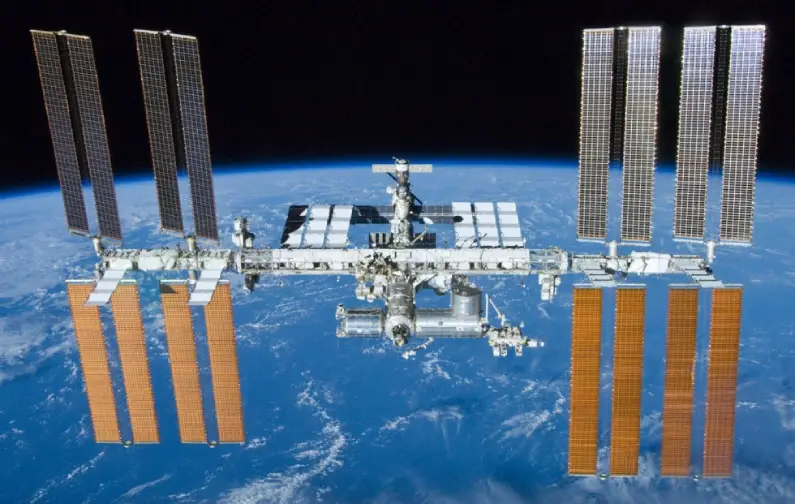
The idea of an orbiting space station was once science fiction, but as the Space Age began in the 1950´s, and avionics and rocket engineering took a giant leap after World War II, it became clear that the construction of such a structure might actually be attainable, and very especially after the first moon landing in 1969.
The first actual steps towards achieving this ambitious goal were taken in 1984 when then American President Ronald Reagan addressed NASA directly instructing them to build the station within the next ten years. One of the most memorable lines from Reagan´s speech that day was:
«Tonight, I am directing NASA to develop a permanently manned space station and to do it within a decade.
A space station will permit quantum leaps in our research in science, communications, and in metals and lifesaving medicines which could be manufactured only in space. We want our friends to help us meet these challenges and share in their benefits. NASA will invite other countries to participate so we can strengthen peace, build prosperity, and expand freedom for all who share our goals.
Just as the oceans opened up a new world for clipper ships and Yankee traders, space holds enormous potential for commerce today.”
And although the presidential directive set by Reagan could not ultimately be met in the time span of ten years, the ISS continued under development until the first segment of the station was launched and successfully put into orbit in 1998. Since then, the ISS has been expanded with fifteen other modules throughout the years adding up to a total of 16 modules as of 2022. Each of the sixteen modules serves a different purpose. Some of the most relevant ones are: navigation, life support, laboratories, living quarters, and docking stations to enable for space vehicles to come and go to and from the station.
This engineering marvel was the result of the combined effort of 5 different space agencies: NASA (United States), Roscosmos (Russia), JAXA (Japan), ESA (Europe), and CSA (Canada); who had the common goal of building an orbiting laboratory and observatory where humanity could expand their knowledge of space, as well as studying and understanding what life was like in it. And besides its research goal, the ISS represents a staging base for future space missions to the Moon, Mars, or whatever other missions around our solar system.
The ISS is the largest artificial object in space to this day and the largest satellite orbiting Earth at an altitude of about 400 km. It is roughly the size of a football field and it is visible to the naked eye from Earth traveling at a speed of almost 28,000 km/h. At this speed, it can circle the Earth in about 93 minutes and complete approximately 15 full orbits per day. So, if you ever look up in the sky at night and see what seems to be a traveling star, don´t panic, it´s not aliens, it´s just the ISS orbiting our planet. And I tell you this, because one night a few years ago, while a I was looking at the stars I saw a bright dot moving fast across the sky and my first reaction was to think I had just seen a UFO, but I hadn´t, obviously. I had just seen the ISS.
The way astronauts get to the ISS was initially through the space shuttle and the Russian Soyuz capsules, but nowadays NASA has partnered up with commercial companies, such as Space-X and Boeing, to build rockets that can allow astronauts to go to and return from the station. As well of course, as sending up supplies such as food, fuel or whatever else that might be needed.
As far as maintenance goes, the many components that form the ISS are operated and monitored by the different space agencies at mission control centers across the globe, but it is up to the astronauts to carry out the repairs and maintenance operations when required. And you can imagine the amount of things to keep in check in a space station, such as oxygen pumps, electrical elements, water supply…and the list goes on. Keeping the station in order is a tremendous task indeed!
The micro-gravity experienced inside the station, which is about 10% of the gravity experienced on Earth, plus the harsh environment of space, enable for scientific research which would otherwise not be possible down on Earth. The fields of research conducted in it include among others, biotechnology, astronomy, meteorology, physics, medicine and engineering. The ISS is also suited for testing the spacecraft systems and equipment required for possible future long-duration missions to the Moon and Mars. But more importantly, it represents a key tool to study life in the hostile environment of space, and how it affects humans at a physical and psychological level.
So as you can imagine, the ISS is a paramount piece in the puzzle towards learning and gathering the necessary skills and knowledge in order to conduct long manned-missions to explore our surroundings in the Solar System as well as for future commercial space flights.
And in case you´d like to know about the many many scientific discoveries that have been achieved in the ISS, check out the following link. I believe, you´ll find them quite interesting ????
LIFE ABOARD
Life in the station is extremely busy and by no means easy. A typical day for the crew begins at 06:00 am, followed by a morning inspection of the station. Then comes breakfast and a daily planning conference with Mission Control before starting work at around 08:00 am. until 13:00 pm. At that time, the non essential crew members stop working and can enjoy a one-hour lunch break.
After lunch, they get back to work and at around 19:30 pm the crew starts their pre-sleep activities, which include a crew conference where they can assess the work carried out during the day and also, have some dinner. And after that, it´s time for bed.
Each astronaut has their own private booth, where they have a sleeping bag attached to a wall, so that they don´t float around the station while sleeping. Besides the sleeping bag, each booth counts with a reading light, a small desk, and some storage space on the walls. In there, the astronauts can read, listen to music or check their personal emails in their laptops.
Typical work day in the space station
The lack of gravity in the station, physically affects the astronauts a great deal. Some of the effects of long-term weightlessness are muscular atrophy, deterioration of the skeleton, a slowing of the cardiovascular system and a weakening of the immune system. This makes work out routines absolutely essential for the physical and mental well being of the astronauts.
On average, every astronaut must exercise for about 2 hours a day to stay healthy, and to do so, they count with special gym machines designed for working out in space. They have a treadmill, which they attach themselves to with bungee cords; a resistance machine, that enables for various weight lifting exercises; and a stationary bicycle similar to the ones we can find on Earth. As you can imagine, it´s not like they can skip gym day if they don´t feel like it one day. Up there, working out every single day is an absolute must. Can you imagine?!
So far, the ISS has been inhabited for almost 22 years. As of December 2021, 251 astronauts, cosmonauts, and space tourists from 19 different nations have visited the space station. The first civilian to ever spend a few days in the ISS was the multimillionaire New Yorker Dennis Tito, who flew up there in 2001. And the first female civilian was the Iranian-American engineer Anousheh Ansari, who flew up to the sation in 2006 and spent a total of 9 days up there.
The future of the ISS is far from over and although it was first thought to be operative until 2020, chances are it will continue in operation for many many years to come.
USEFUL VOCABULARY
|
successes |
= |
éxitos |
|
beacon |
= |
luz guía (como un faro o baliza) |
|
creeds |
= |
credos |
|
manpower |
= |
mano de obra |
|
leap |
= |
salto hacia delante |
|
attainable |
= |
factible |
|
To Strengthen |
= |
Fortalecer |
|
To Set |
= |
Establecer |
|
To Meet a goal |
= |
Cumplir un objetivo |
|
time span |
= |
periodo de tiempo |
|
To Add up to |
= |
Sumar hasta |
|
as of 2022 |
= |
por ahora en 2022 |
|
knowledge |
= |
conocimiento(s) |
|
what life is like |
= |
como es la vida |
|
roughly |
= |
apróximadamente/sin detallar |
|
the naked eye |
= |
a simple vista/sin lentes |
|
UFO |
= |
OVNI |
|
whatever else |
= |
cualquier otra cosa |
|
as far as «something» goes |
= |
en lo que respecta a «algo» |
|
harsh |
= |
duro/severo |
|
among |
= |
entre (varios) |
|
busy |
= |
ocupado/atareado |
|
by no means |
= |
de ningún modo |
|
crew |
= |
tripulación |
|
booth |
= |
cabina |
|
besides |
= |
además |
|
the lack of |
= |
la falta de |
|
a great deal |
= |
en gran manera |
|
weightlessness |
= |
estado en el que no hay peso |
|
weakening |
= |
debilitamiento |
|
To Work out |
= |
Hacer ejercicio |
|
well being |
= |
bien estar |
|
on average |
= |
de media |
|
treadmill |
= |
cinta de correr |
|
bungee cords |
= |
cuerdas elásticas |
|
so far |
= |
por ahora/hasta el momento |